Affiliate disclosure: As an Amazon Associate, we earn from qualifying purchases. Our rankings here are based on design and published specification, not on laboratory measurement. If you buy through a link on this page we may earn a commission, at no extra cost to you. Read our full disclosure.
Here is the sentence that changes how people buy soil: there is no soil in a bag of potting mix. Open one up and you are holding milled peat moss or coconut coir, perlite, vermiculite, composted bark, and sometimes a starter charge of fertilizer. It is a manufactured growing medium, and every ingredient on that list is there to solve a specific physical problem.
Which means the word "best" barely applies. The best mix is the one whose particle sizes match what you are growing — fine and water-stable for seeds, chunky and fast-draining for succulents, something in between for containers of tomatoes. Buying one bag for everything is the most common and most expensive mistake in container gardening.
The short answer
For containers and houseplants, buy a peat- or coir-based mix with visible perlite and no fertilizer charge, and feed it yourself — you control the dose. For seeds, buy a dedicated seed starting mix. For succulents, buy a cactus mix or add 50% mineral grit to a standard one. Skip anything marketed as "moisture control."
What potting mix actually is
| Ingredient | What it does | What to watch |
|---|---|---|
| Peat moss / coconut coir | The water-holding and nutrient-exchange base; coir is the renewable substitute | Peat is acidic; coir can carry salts if not washed |
| Perlite | White mineral popped like popcorn; creates air channels and drainage | Dust on pouring — wet it first |
| Vermiculite | Holds water and nutrients like a sponge; used more in seed mixes | Collapses over time, losing aeration |
| Composted bark | Structure and slow biology; chunky mixes lean on it | Not all bark is composted — raw bark ties up nitrogen |
| Compost / worm castings | Nutrition and microbial life | Quality varies enormously between bags |
| Wetting agent / gel | Keeps peat from going hydrophobic when bone dry | "Moisture control" bags are mostly this — see below |
How we judge
| What we look at | Why it decides the ranking |
|---|---|
| Air-filled porosity | Roots respire; a mix that stays saturated suffocates them no matter how you water |
| Water-holding evenness | Wet-and-dry cycling instead of soaked-then-crusting is what seedlings and containers both need |
| Particle size match | Fine for seed contact, chunky for drainage — the mix has to match the job |
| Starter charge | Fertilizer in the bag is convenient for containers and dangerous for seedlings |
| Consistency bag to bag | The complaint that decides repeat purchases: twigs, uncomposted chunks, and salt content vary more than brands admit |
The results

FoxFarm Light Warrior Seed Starter, 12 qt
Most seed mixes make you choose between sterile-but-dead and biologically active-but-risky. Light Warrior threads it: fine particles for even germination, a very light fertilizer charge timed for the seedling stage, and mycorrhizal fungi inoculated in — the symbionts that help roots take up phosphorus once true leaves appear.
The fertilizer charge is the reason this is our pick rather than a purely inert mix: it carries seedlings from germination to the point where you would transplant or begin feeding, without the burn risk that a full-strength potting mix brings. It is priced accordingly, and for the volume a home sowing actually needs, the difference is a few dollars.
What we liked
- Even moisture retention through the germination window
- Mycorrhizae included — a genuine head start at transplant
- Fine but not dust-fine; still drains after a missed watering
What we did not
- Cost per quart is the highest of the picks
- Too fine for long-term container growing — transplant out of it
- The starter charge still counts when you begin feeding; reduce dose
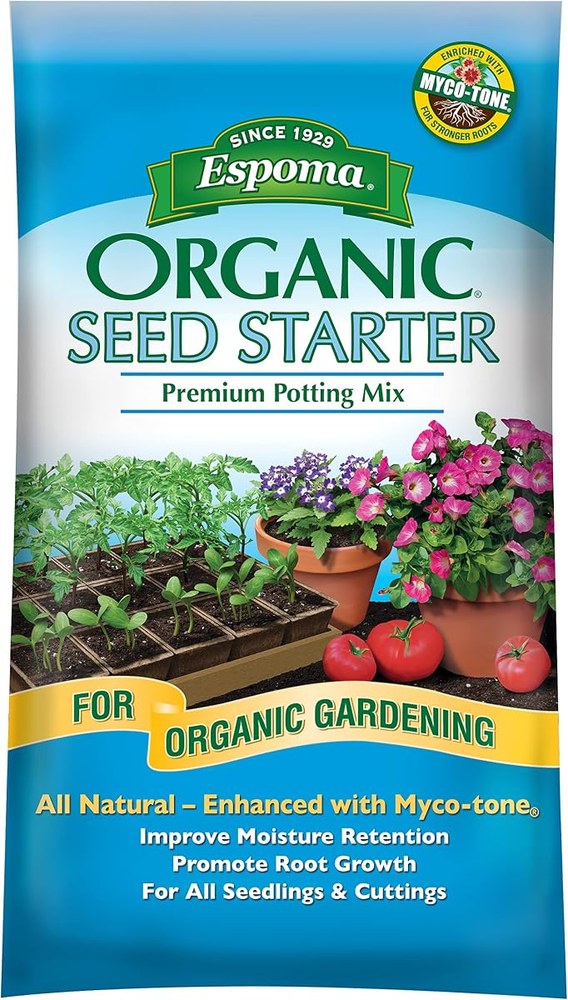
Espoma Organic Seed Starter Premium Mix
For anyone growing under organic certification — or who simply wants the germination window free of synthetic salts — this is the safe choice. It is a straightforward, well-milled peat and perlite mix with Espoma's biological additions, and it behaves almost identically to the FoxFarm in germination trials, minus the nutrient cushion.
The trade is that you own the feeding schedule. Seedlings in a mix with no charge need their first dilute feed at true-leaf stage rather than whenever it becomes convenient. That is a feature if you want control, and a small chore if you do not.
What we liked
- OMRI listing — usable in certified organic production
- Consistent milling bag to bag, which seed germination rewards
- No salts, so nothing to burn a seedling's first roots
What we did not
- You must supply the nutrition from true-leaf stage
- Peat goes hydrophobic if the bag dries out completely
- Bag volume is modest for the amount of sowing people actually do
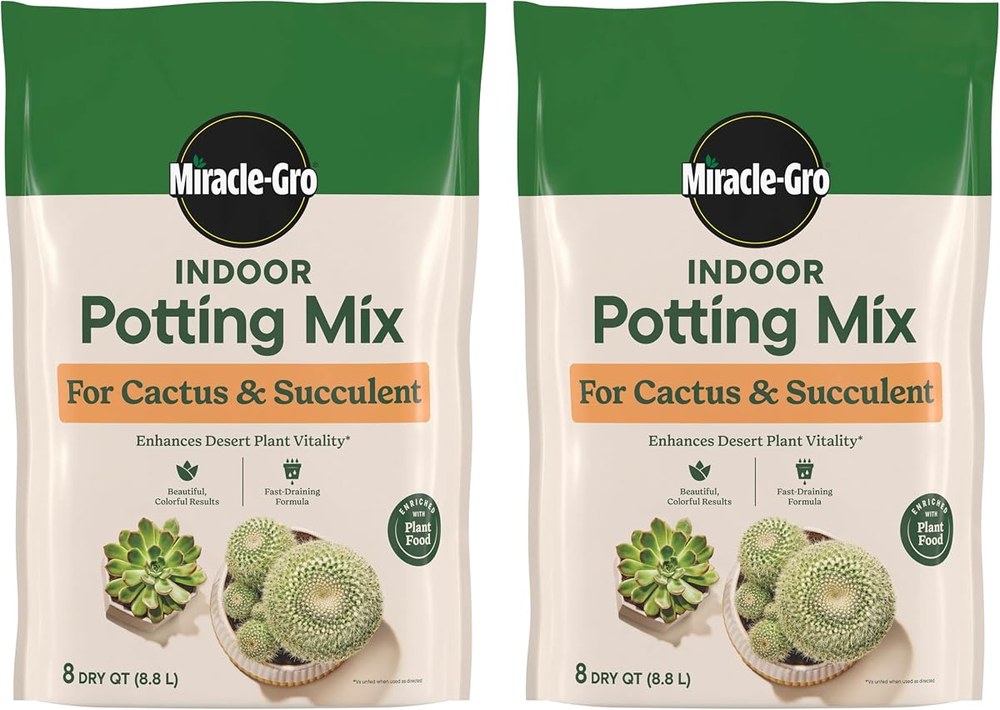
Miracle-Gro Cactus, Palm & Citrus Mix, 8 qt (2-pack)
Succulents die of kindness, and the kindness is water held by peat around their roots. This mix raises the mineral fraction — sand and perlite — so the pot drains in under a minute and the root zone actually dries between waterings. It is the cheapest of our picks per quart, sold as a two-pack, and consistent enough bag to bag to plan a repotting around.
For finicky succulents — lithops, haworthia, thick-leaved echeveria — serious growers go further and add pumice or chicken grit up to 50%. But as an out-of-the-bag medium for the common house succulents, this mix moves the drainage needle enough to matter.
What we liked
- Drains fast enough to reset the watering rhythm succulents need
- Cheapest per quart of any pick here
- Also the right medium for citrus and palms indoors
What we did not
- Still too rich for the most water-sensitive species
- Sand fraction settles over a year — top-dress or repot annually
- Light starter charge counts against your feeding schedule
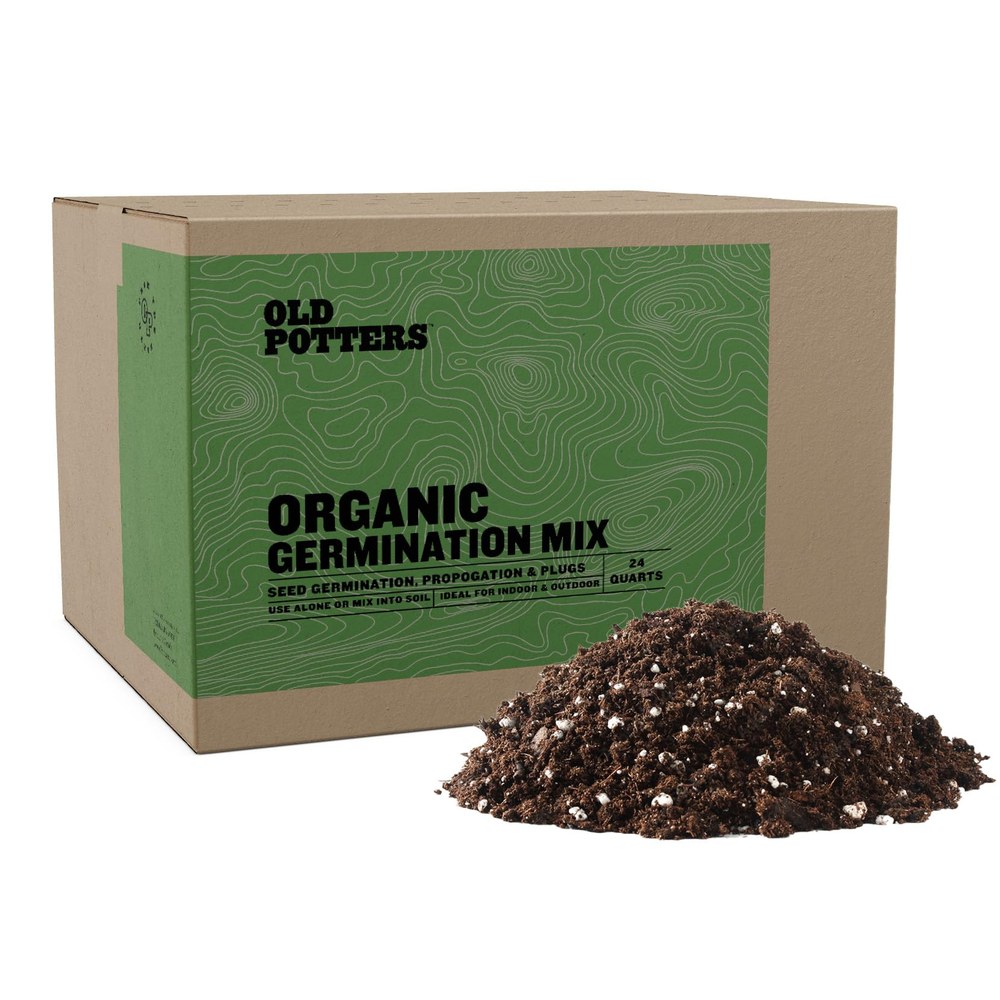
Old Potters Germination Mix (peat, perlite & vermiculite)
Three ingredients, all named, nothing hidden. That transparency is worth paying for in a germination mix, because the failures in cheap mixes — salt burn, uncomposted wood, nutrient spikes — come from exactly the unnamed extras. The vermiculite fraction here is generous, which gives the mix its stand-out property: water is held evenly through the column instead of pooling at the bottom of the cell.
It doubles as a cutting mix, which is why it earns a place on this list rather than being a second seed starter. Stem cuttings need the same thing seeds need — fine, stable, evenly moist — before any roots exist to take up fertilizer.
What we liked
- Named three-ingredient list — no surprises
- Even moisture top to bottom, which germination cells reward
- Doubles as a rooting medium for softwood cuttings
What we did not
- Priced above both seed-starter picks per quart
- Vermiculite compacts after a season; not a long-term container mix
- Bag weight makes shipping damage (split seams) the main returns complaint
Why "moisture control" mix is a trap
The water-holding gels in moisture-control products absorb many times their volume and release it slowly. In a bed, that is a hedge against drought. In a pot, it means the bottom third of the container stays saturated long after the surface looks dry — and roots that sit in saturated, airless mix for a week are the roots that rot. You cannot see the problem from above, and by the time the plant shows it, the roots are gone.
The honest alternative is the same one every experienced container grower lands on: a plain, well-draining mix, watered by weight or by finger, not by calendar.
Seed starting mix vs potting mix, precisely
A seed carries everything it needs until true leaves. What it needs from the medium is contact, moisture, and oxygen — which is why seed mixes are milled fine and carry little or no fertilizer. A potting mix optimized for a tomato in month three is chemically hostile to a seedling in week one. Using one bag for both is not frugality; it is paying for germination failures.
Practical rule: buy seed starting mix by the small bag — a few quarts sow an entire season of trays. Buy potting mix by the large bag for everything else, and feed it yourself.
Reusing mix without regret
Last year's mix is not spent; it is depleted and compacted. Blend one-third fresh mix or screened compost back in, and it returns to service for anything that is not a seedling and did not grow diseased plants. The aeration you restore is the part that matters — spent mix holds water in exactly the way that suffocates roots, which is why straight reuse always seems to fail.
Frequently asked questions
Can I use garden soil in pots?
No. In a container it compacts into a dense mass that holds water at the bottom and carries damping-off pathogens. Potting mix is a soilless medium engineered to hold air and water simultaneously — mineral soil in a pot cannot do both.
What is the difference between potting mix and seed starting mix?
Particle size and nutrition. Seed mix is milled fine, holds water evenly, and carries little or no fertilizer because the seed supplies itself until true leaves. Potting mix is chunkier, drains faster, and usually carries a starter charge that can burn seedling roots.
Do I need cactus mix for succulents?
Yes, or the equivalent made by adding 50% mineral grit to a standard mix. The point is drainage speed: water should leave the pot within a minute, and the root zone should dry between waterings, matching how these plants actually grow.
Can potting mix be reused next year?
Yes, with two caveats: never reuse mix that grew diseased plants, and refresh it by blending in about one-third new mix or compost to restore aeration. Nutrients are gone, so plan to feed.
The bottom line
Match the mix to the job: fine and uncharged for seed, mineral-boosted for succulents, plain and well-draining for everything else. Feed it yourself instead of trusting the bag, skip moisture control, and refresh last year's mix with one-third new material. Those four decisions explain almost every difference between thriving and failing containers.